


⏱️ Reading Time: 7 Minutes
📖 At a Glance
Best For: Performance enthusiasts, car buyers, young motorists, automotive technology fans, and Kenyan drivers interested in understanding the technology behind modern performance vehicles.
Key Takeaway: You don’t need to own a race car to benefit from motorsport technology. Many technologies developed or refined through racing now influence everyday vehicles—but understanding how they work is essential before deciding whether they’re right for your driving needs.
🔑 Key Takeaways
- Motorsport has influenced many technologies found in modern road cars.
- Turbocharging can deliver impressive power from smaller engines.
- Performance brakes are designed to handle intense heat.
- Aerodynamics can improve stability and efficiency.
- Hybrid technology has become increasingly important in performance cars.
- Advanced suspension systems can transform how a vehicle handles.
- Performance technology can also increase maintenance costs.
- Kenyan drivers should understand the difference between performance and practicality.

🏎️ What Does Motorsport Have to Do With Your Everyday Car?
You might think racing has nothing to do with your morning commute.
After all, most Kenyan motorists aren’t driving at 250 km/h.
You’re probably more concerned about:
- Nairobi traffic.
- Fuel consumption.
- Speed bumps.
- Potholes.
- Parking.
- Maintenance costs.
But here’s the interesting thing:
Many technologies that make modern cars better were influenced by the world of motorsport.
Racing is where manufacturers push vehicles to their limits.
Engineers ask:
How can we make the car faster?
How can we make it stop quicker?
How can we keep it stable?
How can we make the engine more efficient?
Eventually, some of those solutions find their way into road cars.
That’s why the technology you see on a racetrack today can influence the car you drive tomorrow.

🚀 1. Turbocharging: More Power From Smaller Engines
Turbochargers are everywhere today.
You can find them in:
- Sports cars.
- Luxury cars.
- SUVs.
- Pickup trucks.
- Everyday family vehicles.
The basic idea is simple.
A turbocharger uses exhaust gases to force more air into the engine.
More air allows the engine to burn more fuel efficiently, producing more power.
Motorsport helped push turbocharging technology forward because racing engineers constantly search for ways to extract more performance from an engine.
But for Kenyan drivers, there is another side to the story.
Turbocharged engines can be incredibly enjoyable to drive.
However, they also require proper maintenance.
Oil quality and servicing become especially important.
A poorly maintained turbocharged vehicle can become an expensive problem.
So if you’re buying a used turbocharged car in Kenya, don’t just ask:
“How fast is it?”
Ask:
“How well was it maintained?”
🛑 2. Performance Brakes: Stopping Is Just as Important as Going Fast
When people talk about performance cars, they usually focus on acceleration.
But racing engineers know something equally important:
You need to stop.
Performance brakes are designed to handle the intense heat generated during repeated hard braking.
Technologies developed for racing have influenced the braking systems found in high-performance road cars.
For everyday Kenyan drivers, this technology can provide benefits in certain situations.
But performance brakes aren’t always necessary for everyone.
If you’re driving mostly around Nairobi, your priorities might be:
- Reliable braking.
- Affordable replacement parts.
- Good brake-pad availability.
- Consistent performance.
You don’t necessarily need the most expensive performance brake system.
You need a braking system that is appropriate for your vehicle and driving conditions.

🌬️ 3. Aerodynamics: Why Shape Matters
Have you ever wondered why race cars look so different from ordinary vehicles?
It’s not just about appearance.
It’s about airflow.
At high speeds, air can dramatically affect how a car behaves.
Aerodynamic features can help:
- Reduce drag.
- Improve stability.
- Increase downforce.
- Improve cornering.
Some of these principles eventually influence road cars.
That’s why modern performance vehicles often feature:
- Spoilers.
- Diffusers.
- Active aerodynamic systems.
- Air vents.
But here’s the Kenyan perspective:
You don’t need a giant spoiler to improve your driving experience.
For most drivers, the more important lesson is that vehicle design affects how a car behaves at speed.
And this becomes particularly relevant when considering high-performance vehicles.
A car designed to perform at high speeds may require a different approach to tyres, suspension, and maintenance than an ordinary commuter vehicle.
🔋 4. Hybrid Power: When Racing Meets Efficiency
One of the most interesting developments in modern motorsport is the rise of hybrid power.
Hybrid technology isn’t just about saving fuel.
It can also provide additional performance.
Electric motors can deliver instant torque.
That means strong acceleration.
Motorsport has helped demonstrate how combustion engines and electric motors can work together to create impressive performance.
And this technology is increasingly relevant to Kenya.
As hybrid vehicles become more common on Kenyan roads, buyers are learning that a vehicle can combine:
Efficiency + Performance
This is one reason hybrid technology deserves a place in our ongoing TorqueSavvy technology conversation.
The same technology that makes performance vehicles more efficient can also help everyday drivers reduce fuel consumption.
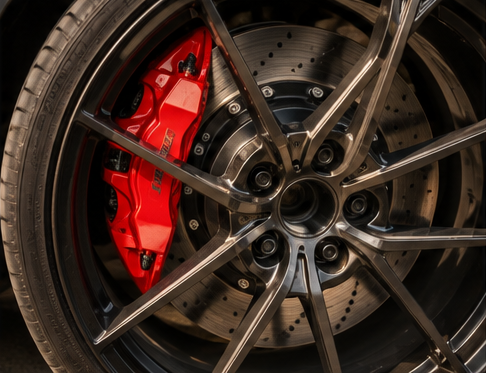
🛞 5. Tyres: The Only Thing Connecting Your Car to the Road
Here’s a technology that every Kenyan driver should take seriously.
Your tyres.
It doesn’t matter how powerful your engine is.
It doesn’t matter how advanced your electronics are.
If your tyres can’t maintain contact with the road, you’re in trouble.
Motorsport has pushed tyre technology to incredible levels.
Racing teams spend enormous amounts of time studying:
- Grip.
- Temperature.
- Compound.
- Pressure.
- Wear.
The average driver doesn’t need racing tyres.
But the lessons are still relevant.
Kenyan motorists should pay attention to:
- Tyre condition.
- Correct pressure.
- Tread depth.
- Tyre age.
- Proper alignment.
And remember:
The cheapest tyre isn’t always the cheapest choice.
A good-quality tyre can contribute to safety, braking performance, fuel efficiency, and comfort.
🏁 6. Advanced Suspension: Why Some Cars Feel Better in Corners
A vehicle’s suspension does more than make your ride comfortable.
It also influences:
- Handling.
- Stability.
- Cornering.
- Braking.
- Tyre contact.
Motorsport has driven the development of advanced suspension systems.
Some high-performance road cars now feature sophisticated systems that can adjust suspension behaviour electronically.
But here’s where Kenyan conditions become important.
A suspension system designed for performance may be brilliant on a smooth racetrack.
But Kenyan roads can present a very different challenge.
Speed bumps.
Potholes.
Uneven surfaces.
Rough roads.
This is why suspension technology should always be considered in context.
The best suspension for a race track isn’t necessarily the best suspension for your daily commute.
🏎️ 7. Launch Control: When a Car Does the Thinking for You
Launch control is one of the most exciting technologies found in modern performance cars.
The system helps the driver achieve a rapid acceleration from a standstill by managing things such as:
- Engine power.
- Gear changes.
- Traction.
- Wheel slip.
It sounds incredible.
And it is.
But here’s the TorqueSavvy warning:
Just because your car can do something doesn’t mean you should do it every day.
Repeated aggressive launches can place stress on:
- Transmission components.
- Drivetrain components.
- Tyres.
- Engine systems.
Your car may be engineered to handle performance driving.
That doesn’t mean the components are immune to wear.
🇰🇪 What Does This Mean for Kenyan Drivers?
This is where the conversation becomes interesting.
Motorsport technology is impressive.
But Kenyan drivers need to ask a different question:
Is this technology useful for me?
For example:
Turbocharging
Excellent for power and efficiency, but maintenance matters.
Performance Brakes
Great for demanding driving, but replacement costs can be higher.
Hybrid Power
Potentially excellent for fuel efficiency and performance, but specialist knowledge may be required.
Advanced Suspension
Can improve handling and comfort, but repairs may be expensive.
Performance Tyres
Can improve grip, but may cost more to replace.
The smartest buyer doesn’t simply choose the vehicle with the most technology.
They choose the technology they can understand, maintain, and afford.
💡 TorqueSavvy Insight
There’s a reason motorsport technology eventually makes its way into everyday cars.
Racing forces manufacturers to solve problems.
Those solutions can eventually improve road vehicles.
But there is an important distinction:
A racetrack is not a Kenyan road.
Your daily vehicle needs to survive your actual environment.
That means performance technology should be evaluated alongside:
- Reliability.
- Maintenance.
- Parts availability.
- Fuel costs.
- Road conditions.
- Driver behaviour.
That’s how you make a smart performance-car decision.
🇰🇪 Performance Cars in Kenya: What Should You Look For?
If you’re considering buying a performance vehicle in Kenya, ask:
1. Is it suitable for my roads?
Ground clearance and road conditions matter.
2. Can I maintain it?
Performance cars can have higher maintenance requirements.
3. Are spare parts available?
Check before buying.
4. Can I find qualified technicians?
Specialised cars may require specialised expertise.
5. Can I afford the tyres?
Performance tyres can be expensive.
6. How much fuel does it consume?
Power comes with a price.
7. Will it retain its value?
Some performance cars have strong resale demand.
🚨 The Performance Car Mistake to Avoid
Don’t confuse performance with speed.
A great performance car isn’t just fast.
It should also:
- Handle well.
- Brake effectively.
- Remain stable.
- Communicate with the driver.
- Deliver predictable power.
- Provide confidence.
A car that accelerates quickly but doesn’t handle or stop properly isn’t a great performance car.
It’s simply a fast car.
🧠 TorqueSavvy Performance Checklist
Before buying a performance vehicle, investigate:
☐ Engine condition.
☐ Turbocharger condition.
☐ Transmission.
☐ Brakes.
☐ Suspension.
☐ Tyres.
☐ Cooling system.
☐ Service history.
☐ Accident history.
☐ Spare-parts availability.
☐ Specialist mechanic availability.
☐ Insurance costs.
☐ Fuel consumption.
☐ Resale potential.
This is where Trackside Thursday meets Kenyan consumer education.
🤔 Did You Know?
Many technologies developed for motorsport don’t arrive in everyday vehicles exactly as they appeared on the track.
Instead, engineers adapt the underlying ideas.
The result may be a technology that is:
- Safer.
- More reliable.
- More affordable.
- Easier to use.
That’s why motorsport continues to influence the automotive industry even when most drivers never visit a racetrack.
⭐ The Bottom Line
Motorsport isn’t just about racing.
It’s about experimentation.
It’s where manufacturers test new ideas, push engineering boundaries, and discover what vehicles can achieve.
Some of those innovations eventually make their way into the cars we drive every day.
For Kenyan motorists, the lesson is simple:
Understand the technology before you buy it.
A turbocharged engine can be fantastic.
A hybrid system can be incredibly efficient.
Performance brakes can provide confidence.
Advanced suspension can transform handling.
But every technology comes with benefits, costs, and maintenance requirements.
So the next time you see an incredible performance car flying around a racetrack, remember:
Some of the technology being tested today could be sitting in your driveway tomorrow.
The question is:
Will you understand how it works?
🏁 TorqueSavvy Trackside Question
If you could bring one piece of motorsport technology into every ordinary Kenyan car, what would you choose?
🏎️ Turbocharging?
🔋 Hybrid power?
🛡️ Advanced safety systems?
🛞 Better tyre technology?
🛑 Performance braking?
Tell us your choice.
