

Artificial Intelligence is no longer something reserved for science fiction movies.
It’s already in your car.
Whether you drive a luxury SUV, a family sedan, or a modern hatchback, there’s a good chance AI is quietly working behind the scenes every time you get behind the wheel.
From safety systems and voice assistants to predictive maintenance and intelligent navigation, artificial intelligence is rapidly transforming the automotive industry.
But what exactly does that mean for drivers?
And should we be excited—or concerned?
Welcome to this week’s Tech Tuesday.

What Is Automotive AI?
Artificial Intelligence refers to computer systems that can analyze information, learn patterns, and make decisions based on data.
In the automotive world, AI helps vehicles:
- Monitor road conditions
- Assist drivers
- Improve fuel efficiency
- Enhance safety
- Predict maintenance needs
- Optimize navigation routes
The goal isn’t to replace drivers completely.
At least not yet.
Instead, AI is designed to make driving safer, smarter, and more convenient.
Your Car Is Already Smarter Than You Think
Many drivers don’t realize how much technology is already operating behind the scenes.
Features such as:
- Adaptive Cruise Control
- Lane Keeping Assist
- Automatic Emergency Braking
- Driver Attention Monitoring
- Traffic Sign Recognition
all rely on advanced software and intelligent decision-making systems.
Every second, your vehicle may be processing thousands of pieces of information.
And it does this without you even noticing.
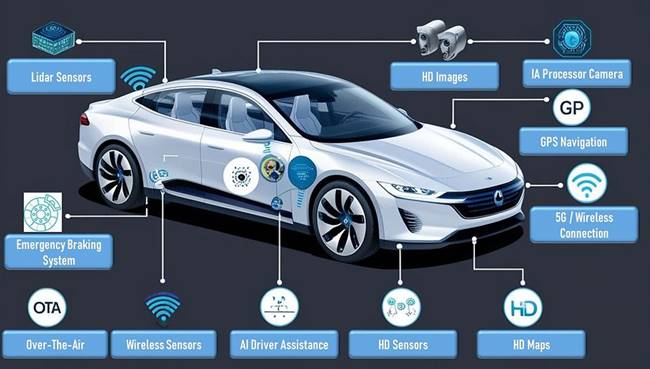
Modern driver-assistance systems rely heavily on artificial intelligence and advanced sensors.
AI Could Save Lives
One of the biggest advantages of automotive AI is safety.
Human drivers make mistakes.
We get tired.
Distracted.
Stressed.
AI systems never become sleepy or distracted.
They continuously monitor:
- Surrounding traffic
- Vehicle speed
- Lane position
- Potential collision risks
While no system is perfect, many experts believe AI-driven safety technologies will significantly reduce road accidents over time.
Predictive Maintenance Is the Future
Imagine your car warning you about a failing battery weeks before it leaves you stranded.
Or detecting brake wear before it becomes dangerous.
This is the promise of predictive maintenance.
Using sensors and AI analysis, future vehicles may identify problems before drivers notice symptoms.
The result?
- Lower repair costs
- Improved reliability
- Fewer unexpected breakdowns
For vehicle owners, this could be one of the most valuable automotive innovations in years.
The Rise of Intelligent Navigation
Navigation systems are becoming smarter than ever.
Modern systems can already:
- Predict traffic congestion
- Suggest alternative routes
- Locate charging stations
- Estimate arrival times more accurately
Future systems may even learn your driving habits and preferences to provide personalized recommendations.
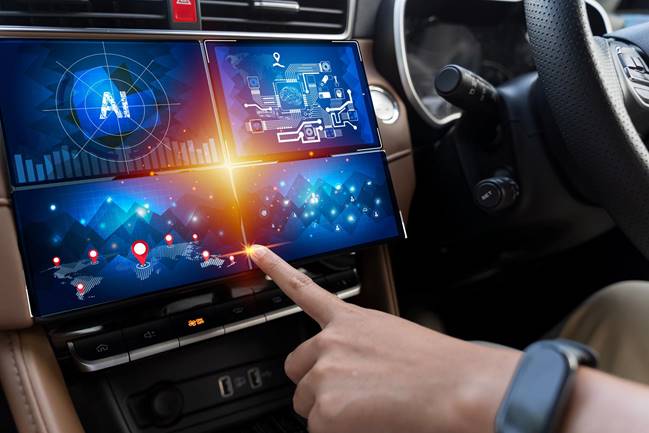
AI-powered navigation systems continue becoming more accurate and personalized.
Will Cars Eventually Drive Themselves?
This is the question everyone asks.
The short answer?
Not completely—at least not for most drivers anytime soon.
While autonomous driving technology continues advancing, fully self-driving vehicles still face technical, legal, and regulatory challenges.
However, many experts believe we will continue seeing gradual increases in automation over the coming years.
Cars may not fully replace drivers yet, but they are becoming increasingly capable partners on the road.
The Downsides of AI in Cars
Like any technology, AI has potential drawbacks.
Some concerns include:
- Data privacy
- Cybersecurity risks
- Over-reliance on automation
- Higher repair costs
- Software-related issues
As vehicles become more connected, manufacturers must ensure security remains a top priority.
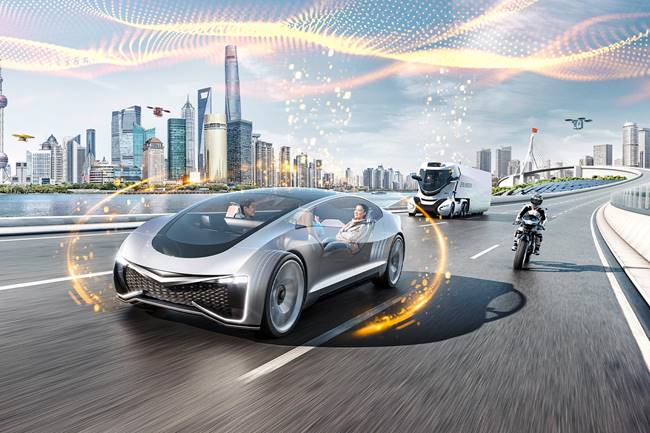
The next generation of vehicles will rely more heavily on software, connectivity, and artificial intelligence.
Final Thoughts
Artificial Intelligence is already reshaping the way we drive.
From preventing accidents to predicting maintenance needs, AI has the potential to make vehicle ownership safer, easier, and more efficient.
The automotive industry is entering a new era where software may become just as important as horsepower.
And while fully autonomous vehicles may still be years away, one thing is certain:
The cars of tomorrow will be smarter than ever before.
Tech Tuesday Question
Would you trust an AI-powered vehicle to drive you to work every day?
Why or why not?
Share your thoughts in the comments below.
