

For decades, horsepower has been the number everyone talks about.
Manufacturers advertise it.
Enthusiasts compare it.
Buyers often use it as the deciding factor when choosing a performance car.
But here’s the truth that surprises many people:
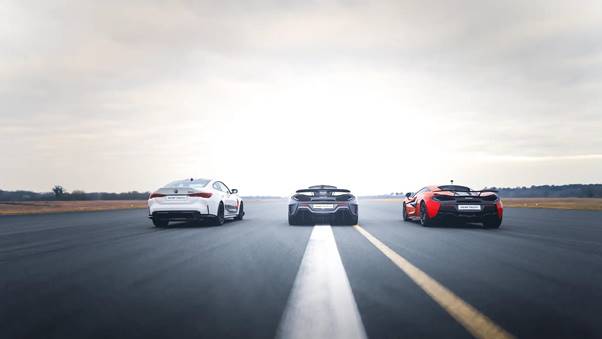
Horsepower alone doesn’t make a car fast.
A 700-horsepower car isn’t automatically quicker around a race circuit than a 400-horsepower sports car. In fact, some of the world’s most respected performance cars prove that balance, precision, and handling often matter just as much—if not more—than outright power.
This week on Performance Friday, we’re exploring why the fastest cars are not always the most powerful.
What Exactly Is Horsepower?
Horsepower is a measurement of an engine’s ability to produce power.
Generally speaking:
- More horsepower means stronger acceleration.
- Higher top speeds become possible.
- Overtaking becomes easier.
It’s an important figure, but it only tells part of the story.
A car with enormous power still needs to put that power onto the road effectively.
Without control, horsepower becomes difficult to use.
Handling Is Where the Magic Happens
Handling describes how well a vehicle responds to steering inputs, maintains grip through corners, and remains stable under braking and acceleration.
A well-balanced chassis allows drivers to carry more speed through corners instead of relying only on straight-line acceleration.
This is why lightweight sports cars often surprise much more powerful rivals on winding roads and race circuits.
The ability to corner confidently can save more time than simply having a bigger engine.

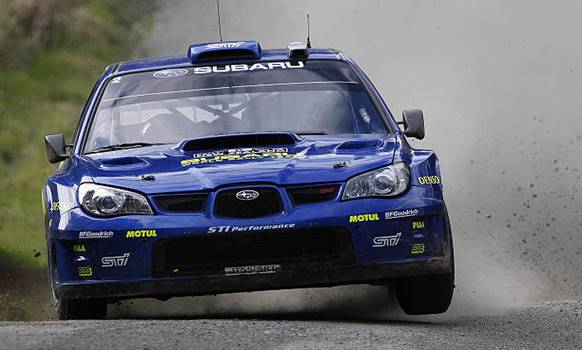
Caption: Great handling allows drivers to carry speed through corners with confidence.
Weight Matters More Than You Think
Imagine two cars with identical horsepower.
One weighs 1,200 kilograms.
The other weighs 2,000 kilograms.
Which one feels quicker?
The lighter vehicle usually accelerates faster, brakes more efficiently, and changes direction with less effort.
That’s why engineers constantly search for ways to reduce weight using materials like aluminium, carbon fibre, and high-strength steel.
Less weight often means better performance in every aspect of driving.
Suspension: The Unsung Hero
Performance isn’t only about engines.
Suspension plays a huge role in how a car behaves.
A well-designed suspension system keeps the tyres in contact with the road, improving grip and stability.
Whether driving through tight corners or over uneven surfaces, quality suspension inspires confidence and allows drivers to push harder safely.
Tyres Are the Only Connection to the Road
Every bit of horsepower must pass through four small patches of rubber.
That’s why tyre quality is so important.
Performance tyres provide:
- Better grip
- Shorter braking distances
- Faster cornering speeds
- Improved driver confidence
Even the most powerful sports car will struggle if it’s fitted with poor-quality tyres.
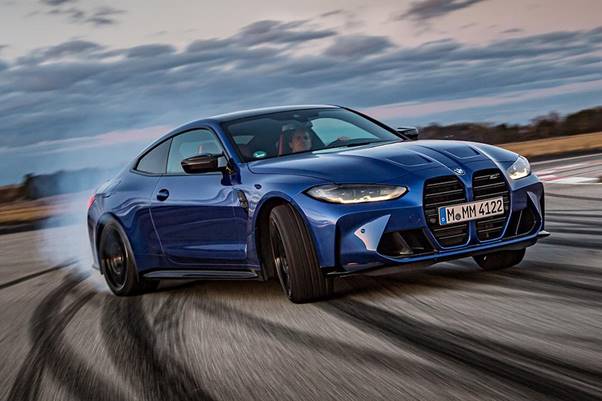
Caption: High-performance tyres help transform engine power into usable grip.
Balance Beats Brute Force
Some of the most admired performance cars aren’t the most powerful.
They’re the most balanced.
Vehicles like the Porsche 911, Mazda MX-5, Lotus Emira, and Toyota GR86 have earned loyal followings because they deliver confidence, precision, and driving enjoyment rather than relying solely on massive horsepower figures.
These cars remind us that driving pleasure comes from harmony between engine, chassis, suspension, steering, and brakes.
Technology Is Changing Performance
Modern performance cars are smarter than ever.
Features such as adaptive suspension, launch control, torque vectoring, active aerodynamics, and intelligent all-wheel-drive systems help drivers extract maximum performance safely.
Technology doesn’t replace skill—but it helps drivers use more of the car’s potential.
As a result, today’s performance cars are quicker, safer, and more predictable than ever before.

Caption: Advanced technology is helping modern performance cars achieve remarkable levels of speed and control.
Final Verdict
Horsepower will always be exciting.
It’s easy to compare numbers on paper.
But true performance is about much more than raw engine output.
Handling.
Balance.
Weight.
Tyres.
Suspension.
Braking.
Driver confidence.
When these elements work together, a car becomes something truly special.
The next time you admire a performance car, don’t just ask how much horsepower it has.
Ask how well it puts that power to the ground.
Because in the world of driving, balance often beats brute force.
Performance Friday Question
If you had to choose, which would you prioritise in your dream performance car?
🔥 700 horsepower with average handling
🏎️ 400 horsepower with exceptional handling
Tell us your choice—and why—in the comments below!
