

Estimated Reading Time: 4 Minutes
Formula 1 is often described as the pinnacle of motorsport, but there’s far more to it than cars racing at over 300 km/h. Every Grand Prix is a battle of engineering, strategy, driver skill, and split-second decision-making, making it one of the most technically advanced sports in the world.
Whether you’re a lifelong fan or just getting into Formula 1, understanding what happens beyond the checkered flag makes every race even more exciting.

A Formula 1 car attacking a high-speed corner with sparks flying as thousands of fans watch from the grandstands.
Every Second Counts
Unlike many other forms of motorsport, Formula 1 races are often decided by fractions of a second. Teams spend millions developing cars that can gain just a few tenths of a second per lap.
From aerodynamic upgrades to tyre management, every small improvement can make the difference between standing on the podium and finishing outside the points.
Drivers Don’t Just Race—They Manage
Modern Formula 1 drivers do much more than drive fast.
During a race they constantly manage:
- Tyre wear
- Battery deployment
- Fuel consumption
- Brake temperatures
- Engine settings
- Communication with the pit wall
All of this happens while battling rivals at incredible speeds, often within centimetres of another car.

A cockpit view showing a Formula 1 driver navigating a fast corner with the steering wheel filled with controls and digital displays.
Strategy Wins Championships
Raw speed alone doesn’t guarantee victory.
Teams analyse enormous amounts of data before and during every race to determine the perfect time for pit stops, tyre changes, and race strategy.
Sometimes an undercut or an early safety car stop can completely change the outcome of a Grand Prix.
That’s why Formula 1 is often described as a game of chess played at 300 km/h.
Technology From Formula 1 Reaches Road Cars
Many innovations found in today’s road cars were first developed in Formula 1.
These include:
- Carbon fibre construction
- Hybrid powertrains
- Energy recovery systems
- Advanced aerodynamics
- Paddle-shift gearboxes
- High-performance braking systems
The sport continues to serve as a testing ground for technologies that eventually make everyday vehicles safer and more efficient.
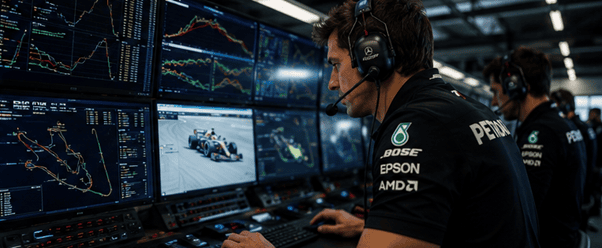
A Formula 1 engineer analysing live race telemetry on multiple computer screens inside the team garage.
The Future of Formula 1
Formula 1 continues to evolve with new technical regulations designed to improve racing while making the sport more sustainable.
The next generation of cars will focus on cleaner fuels, lighter designs, and closer racing, ensuring the championship remains both competitive and environmentally conscious.
As technology advances, fans can expect even more innovation on and off the track.
Final Thoughts
Formula 1 isn’t just about who crosses the finish line first—it’s a showcase of engineering brilliance, strategic thinking, and world-class driving talent.
Every race tells a different story, and that’s what keeps millions of fans coming back every weekend.
Whether you’re watching for the speed, the strategy, or the spectacular wheel-to-wheel battles, Formula 1 remains the ultimate proving ground for automotive innovation.

A Formula 1 podium celebration at sunset with the winning driver spraying champagne as the crowd celebrates in the background.
