

⏱️ Reading Time: 7 Minutes
📖 At a Glance
Best For: Kenyan car buyers, first-time buyers, used-car shoppers, importers, technology enthusiasts, and anyone considering a modern vehicle.
Key Takeaway: Modern cars are becoming smarter, but smarter doesn’t always mean simpler. Kenyan buyers need to understand how modern vehicle technology works, how to inspect it before buying, and whether they can access the right technical support when something goes wrong.
🔑 Key Takeaways
- Modern cars are increasingly computers on wheels.
- Technology can improve safety, comfort, convenience, and driving enjoyment.
- Advanced features can also become expensive to repair.
- Kenyan buyers should test electronic systems before purchasing a used vehicle.
- Not every mechanic can properly diagnose modern vehicle problems.
- Genuine electronic components can be expensive.
- Technology should be considered part of the total cost of ownership.
- A feature-rich vehicle isn’t automatically the best choice for every Kenyan driver.
🚗 The Car You Buy Today Is Not the Same Car Your Parents Bought
There was a time when buying a car meant focusing on a few basic questions:
How big is the engine?
How much fuel does it use?
Is the gearbox manual or automatic?
Is it reliable?
Those questions still matter.
But today’s car buyer has a lot more to think about.
Modern vehicles can have:
- Cameras.
- Radar sensors.
- Parking sensors.
- Digital dashboards.
- Touchscreens.
- Smartphone connectivity.
- Keyless entry.
- Push-button start.
- Adaptive cruise control.
- Lane-keeping assistance.
- Automatic emergency braking.
- Hybrid systems.
- GPS technology.
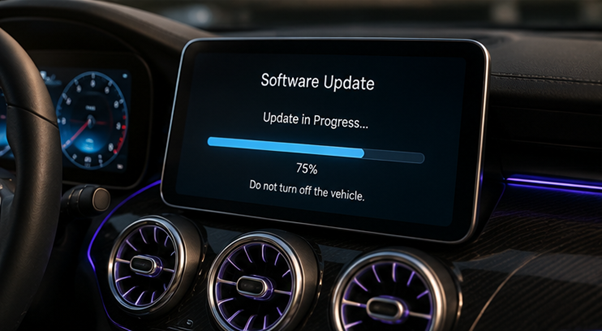
The car is no longer just a machine.
It is increasingly a computer with wheels.
And for Kenyan buyers, that creates both opportunities and challenges.
📱 1. Infotainment and Smartphone Connectivity
Let’s start with technology most drivers interact with every day.
The infotainment system.
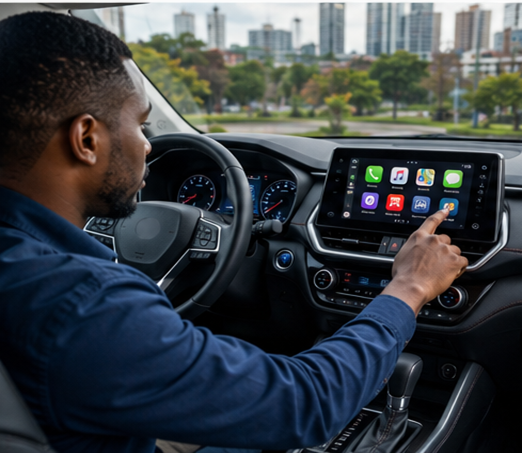
Modern vehicles increasingly offer:
- Touchscreen displays.
- Bluetooth connectivity.
- Apple CarPlay.
- Android Auto.
- Navigation.
- Voice controls.
- Wireless charging.
For Kenyan motorists, this technology can make everyday driving much easier.
Imagine navigating Nairobi traffic without constantly reaching for your phone.
Or taking a call without holding your phone while driving.
Or playing your favourite playlist directly through the vehicle’s audio system.
But here’s something important:
Test everything before buying a used car.
Don’t assume that because the screen turns on, everything works.
Check:
- Touchscreen response.
- Bluetooth.
- Speakers.
- USB ports.
- Navigation.
- Reverse camera.
- Steering-wheel controls.
A malfunctioning infotainment system may not stop your car from moving—but replacing one can still be expensive.
🛡️ 2. ADAS: The Technology That Can Help You Drive More Safely
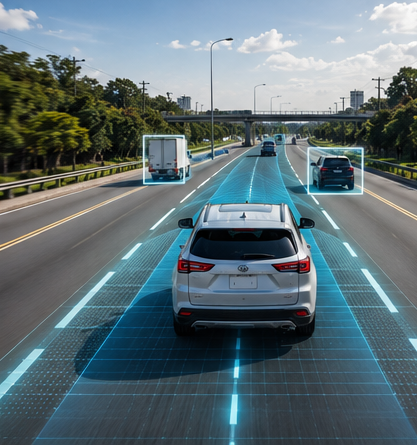
ADAS stands for Advanced Driver Assistance Systems.
This technology is becoming increasingly common in modern vehicles.
It can include:
- Lane departure warning.
- Lane-keeping assistance.
- Blind-spot monitoring.
- Adaptive cruise control.
- Automatic emergency braking.
- Forward collision warning.
These systems are designed to assist the driver.
They are not replacements for the driver.
This distinction is important.
A Kenyan driver should never assume that a car with advanced safety technology can drive itself.
Road conditions, traffic behaviour, pedestrians, motorcycles, and unpredictable driving situations still require human attention.
And there’s another consideration:
Sensors and cameras can be expensive to repair.
If a vehicle has been involved in an accident, the damage may not always be visible.
A bumper can look perfectly fine while a radar sensor behind it has been damaged.
That’s why a thorough inspection is critical when buying a used vehicle with advanced driver-assistance systems.
📷 3. 360° Cameras and Parking Technology
If you’ve ever tried parking in a crowded Nairobi shopping centre, you’ll understand why this technology is becoming popular.
A 360° camera system can give drivers a bird’s-eye view around the vehicle.
Combine that with:
- Parking sensors.
- Reverse cameras.
- Front cameras.
…and parking becomes significantly easier.
This technology can be particularly useful for large SUVs and luxury vehicles.
But there’s a catch.
Cameras can be damaged.
Sensors can fail.
And calibration can sometimes be required after an accident or repair.
So when buying a used car, don’t simply admire the technology.
Test it.
Put the car into reverse.
Check the camera.
Test the sensors.
Look for warning messages.
Technology that isn’t working properly should be treated as part of the vehicle’s condition—and potentially part of the negotiation.
🔑 4. Keyless Entry and Push-Button Start
Modern convenience has changed the way we interact with cars.
You can now approach your vehicle and unlock it without taking the key from your pocket.
Then press a button and start the engine.
Convenient?
Absolutely.
But technology also introduces new considerations.
Keyless systems rely on electronic components and smart keys.
If the key is lost, replacing it can be expensive.
And vehicle owners should also understand basic security practices around keyless systems.
When buying a used vehicle, check:
- Are all keys available?
- Does keyless entry work?
- Does push-button start work?
- Does the car recognise the key consistently?
- Is there a spare key?
A missing spare key may seem like a small issue.
Until you discover how expensive a replacement can be.
🧠 5. The ECU: The Computer Running Your Car
The Engine Control Unit, commonly known as the ECU, is one of the most important computers in a modern vehicle.
It helps control and monitor many aspects of engine operation.
When something goes wrong, the vehicle may store diagnostic trouble codes.
This is where modern diagnostics become extremely useful.
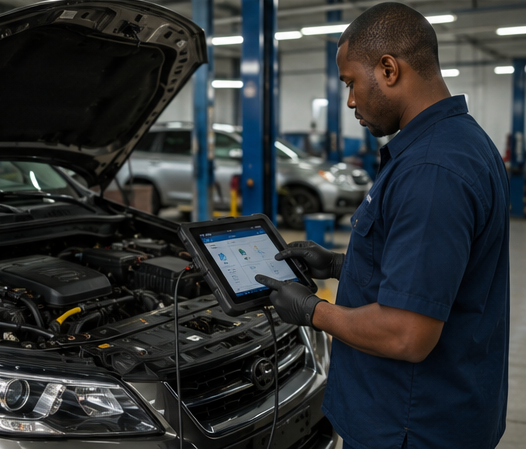
A technician can connect a diagnostic scanner and investigate the vehicle’s electronic systems.
But here’s the Kenyan reality:
Owning a diagnostic scanner doesn’t automatically make someone a good diagnostic technician.
Understanding the data requires knowledge and experience.
That’s why choosing the right technician is increasingly important.
Modern vehicle maintenance isn’t only about having a toolbox.
It is also about understanding technology.
🇰🇪 6. Can Your Kenyan Mechanic Handle Your Modern Car?
This is one of the most important questions Kenyan buyers should ask.
The technology in cars is changing rapidly.
But is the local repair ecosystem changing just as quickly?
The answer is:
It depends.
Some Kenyan workshops have invested heavily in modern diagnostic equipment and specialist training.
Others may still be more comfortable working on simpler mechanical systems.
This doesn’t mean older mechanics aren’t skilled.
Far from it.
It simply means that different vehicles require different expertise.
A mechanic who is excellent at rebuilding a traditional diesel engine may not necessarily be the best person to diagnose a complex hybrid system or advanced electronic fault.
As cars become smarter, Kenyan motorists will increasingly need to choose technicians based on specialisation, not just reputation.
💡 TorqueSavvy Insight
The next generation of Kenyan mechanics may need to be comfortable with both:
A spanner 🔧
and
a laptop 💻.
The future workshop may combine:
- Mechanical repairs.
- Electronic diagnostics.
- Software updates.
- Sensor calibration.
- Hybrid system knowledge.
- Battery technology.
This is one of the biggest changes coming to the automotive industry.
And it is already happening.
🔋 7. Hybrid Technology and Regenerative Braking
Hybrid vehicles are becoming increasingly popular in Kenya.
And one of the technologies that makes them different is regenerative braking.
Instead of allowing all braking energy to disappear as heat, the system can recover some of that energy and use it to recharge the battery.
For the driver, this can improve efficiency.
For the vehicle, it creates a different driving experience.
But hybrids also introduce components that traditional petrol cars don’t have.
These may include:
- High-voltage batteries.
- Electric motors.
- Inverters.
- Hybrid control systems.
This means hybrid maintenance requires specialised knowledge.
The good news?
Kenya is becoming increasingly familiar with hybrid vehicles.
The challenge?
The market still needs more specialised technicians and broader access to expertise.
💰 The Hidden Cost of Smart Cars
Here’s the part many buyers don’t think about.
Technology can be expensive when it fails.
Imagine buying a used car because it has:
- A 360° camera.
- Adaptive cruise control.
- Digital dashboard.
- Premium infotainment.
- Keyless entry.
You love the features.
Then one day, something stops working.
Suddenly, you’re no longer thinking about how impressive the technology is.
You’re thinking:
“How much will this cost to fix?”
That’s why modern technology should always be considered part of the vehicle’s total ownership cost.
Before buying, ask:
Are replacement parts available?
Are technicians familiar with this system?
How much do sensors cost?
Can the system be diagnosed locally?
Are genuine components available?
This is particularly important when importing vehicles that may be uncommon in Kenya.
🚨 The Big Mistake Kenyan Buyers Should Avoid
Don’t test only the engine and gearbox.
When buying a modern used car, test the technology too.
Here’s your quick checklist:
🔍 Technology Inspection Checklist
☐ Infotainment screen works.
☐ Bluetooth works.
☐ Speakers work.
☐ Reverse camera works.
☐ Parking sensors work.
☐ 360° camera works.
☐ Air conditioning controls work.
☐ Digital dashboard has no warning lights.
☐ Keyless entry works.
☐ All available keys are present.
☐ Driver-assistance systems show no faults.
☐ Electric windows and mirrors work.
☐ Sunroof works, if equipped.
☐ Diagnostic scan has been performed.
Remember:
A car can have a healthy engine and still have thousands of dollars’ worth of electronic problems.
🇰🇪 What Should You Do Before Buying a High-Tech Used Car?
Here’s the TorqueSavvy approach:
Step 1: Research the Technology
Understand what features the car should have.
Step 2: Test Everything
Don’t assume it works.
Step 3: Scan the Vehicle
Get a proper diagnostic check.
Step 4: Check the History
Look for previous accident damage.
Step 5: Find a Specialist
Use a technician familiar with that particular vehicle.
Step 6: Check Parts Availability
Find out what happens if something fails.
Step 7: Calculate the Ownership Cost
Don’t focus only on the purchase price.
🧠 TorqueSavvy’s Smart Buyer Rule
When buying a modern vehicle, think about three things:
Technology
What can the car do?
Support
Who can repair it?
Cost
What happens when it breaks?
If you can answer all three questions confidently, you’re in a much better position to buy.
📊 Which Technology Should Kenyan Buyers Prioritise?
| Technology | Everyday Value | Kenyan Buyer Consideration |
| Reverse Camera | ⭐⭐⭐⭐⭐ | Easy to use and highly practical |
| Parking Sensors | ⭐⭐⭐⭐⭐ | Excellent for urban driving |
| Smartphone Integration | ⭐⭐⭐⭐⭐ | Very useful for daily driving |
| 360° Camera | ⭐⭐⭐⭐⭐ | Great for larger vehicles |
| ADAS | ⭐⭐⭐⭐☆ | Valuable but requires proper calibration |
| Keyless Entry | ⭐⭐⭐⭐☆ | Convenient but replacement keys can be costly |
| Hybrid Technology | ⭐⭐⭐⭐⭐ | Excellent efficiency but requires specialised support |
| Advanced Infotainment | ⭐⭐⭐⭐☆ | Great convenience but can be costly to replace |
🇰🇪 Kenyan Buyer’s Verdict
Best technology for Nairobi drivers:
📷 360° cameras + parking sensors
Best technology for long-distance drivers:
🛡️ Advanced driver assistance systems
Best for fuel-conscious motorists:
🔋 Hybrid technology
Best everyday convenience:
📱 Smartphone integration
Most important before buying a used car:
💻 A proper diagnostic scan
Most overlooked factor:
🔧 Availability of qualified technicians
🤔 Did You Know?
A warning light on your dashboard doesn’t always mean the same thing.
Sometimes it may indicate a relatively minor issue.
Other times, it could signal a serious problem.
The important lesson is:
Never ignore warning lights.
And never assume that simply clearing a warning code means the underlying problem has been fixed.
A proper diagnosis should identify why the warning appeared in the first place.
⭐ The Bottom Line
The smartest car on the road isn’t necessarily the one with the biggest touchscreen.
It’s the one whose technology actually makes your life better.
For Kenyan motorists, modern vehicle technology offers incredible benefits.
It can make cars:
- Safer.
- More comfortable.
- More efficient.
- Easier to drive.
- More enjoyable.
But it also creates new responsibilities.
The next time you’re buying a used car, don’t just open the bonnet.
Open the technology conversation too.
Ask:
Does it work?
Can it be repaired here?
Can I afford to maintain it?
Because in the modern automotive world, understanding the engine is no longer enough.
You need to understand the computer running the car, too.
🚗 TorqueSavvy CTA
Thinking About Buying a Modern Used Car?
Before you commit, make sure you understand what you’re buying.
From checking the vehicle’s mechanical condition to understanding its technology and maintenance needs, a proper inspection can save you from expensive surprises later.
👉 Visit TorqueSavvy and learn how to make a smarter car-buying decision.
💬 Tech Tuesday Question
If you were buying your next car, which technology would you refuse to live without?
📷 360° Camera?
📱 Apple CarPlay / Android Auto?
🛡️ Driver-assistance technology?
🔋 Hybrid technology?
🔑 Keyless entry?
Tell us what you would choose—and why.
