

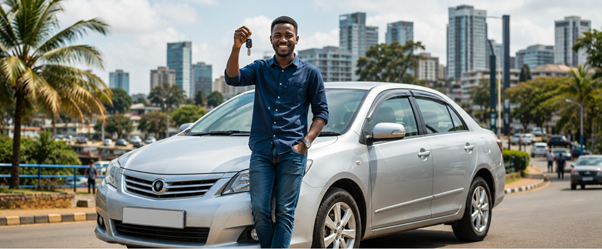
📖 At a Glance
Best For: First-time car buyers in Kenya, young professionals, new families, students entering the workforce, and anyone preparing to purchase their first vehicle.
Key Takeaway: Buying your first car is not just about finding money for the vehicle. The smartest Kenyan buyer considers the entire ownership journey—from choosing the right car and inspecting it to transferring the logbook, maintaining it, finding spare parts, and eventually selling it.
🔑 Key Takeaways
- Your first car doesn’t need to be your dream car.
- The cheapest car to buy isn’t always the cheapest car to own.
- You should inspect a used vehicle before paying for it.
- Ownership transfer is part of the buying process.
- Fuel economy matters, but so does maintenance cost.
- Spare-parts availability should influence your decision.
- A car that suits your lifestyle is better than one that simply looks impressive.
- You should budget for unexpected repairs.
- Never spend your entire budget on the purchase price alone.
🚗 So, You Want to Buy Your First Car?
Congratulations.
For many Kenyans, buying a first car is a major milestone.
It can mean:
- More freedom.
- Easier commuting.
- Greater independence.
- Family convenience.
- New business opportunities.
- Less reliance on public transport.
But here’s something many first-time buyers discover too late:
Buying the car is the easy part.
Owning it is the real journey.
The excitement of finding a beautiful vehicle can quickly disappear when you discover that the car needs new tyres, the battery is dying, the insurance is expensive, or the previous owner never properly maintained it.
That’s why your first car should be a decision—not an impulse.
🇰🇪 Step 1: Start With Your Life, Not the Car
Before searching for a vehicle, ask yourself:
Why do I need a car?
Are you commuting to work?
Travelling upcountry regularly?
Starting a family?
Running a business?
Doing deliveries?
Driving mainly around Nairobi?
Your answers should influence the type of car you buy.
Someone who spends most of their time in Nairobi may prioritise:
- Fuel economy.
- Compact size.
- Easy parking.
- Automatic transmission.
Someone travelling regularly upcountry may prioritise:
- Ground clearance.
- Reliability.
- Suspension durability.
- Fuel efficiency.
Someone running a business may need:
- Cargo space.
- Low running costs.
- Easy access to spare parts.
The right first car is the one that fits your life.
💰 Step 2: Don’t Spend Your Entire Budget on the Car
This is one of the biggest mistakes first-time buyers make.
Suppose you’ve saved enough money to buy a car.
It’s tempting to spend every last cent on the purchase.
Don’t.
You still need to think about:
- Insurance.
- Ownership transfer.
- Fuel.
- Initial servicing.
- Tyres.
- Battery.
- Unexpected repairs.
- Parking.
- Car wash.
- Annual maintenance.
A car can be perfectly healthy today and still need something repaired next month.
Your purchase budget should therefore not be the same as your total car ownership budget.
TorqueSavvy Rule
Car budget + immediate costs + emergency maintenance fund = realistic first-car budget
That’s a much safer way to approach your first purchase.
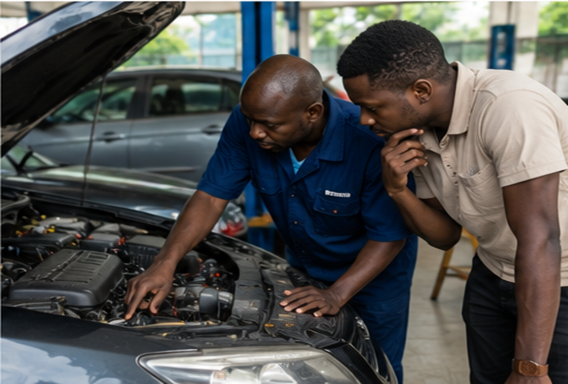
🔍 Step 3: Never Buy a Used Car Without an Inspection
A shiny exterior can hide serious problems.
Before buying a used vehicle, check:
Engine
Look for unusual sounds, smoke, leaks, and signs of poor maintenance.
Transmission
Check whether gear changes are smooth.
Suspension
Listen for unusual noises when driving over bumps.
Brakes
Check braking performance and unusual vibrations.
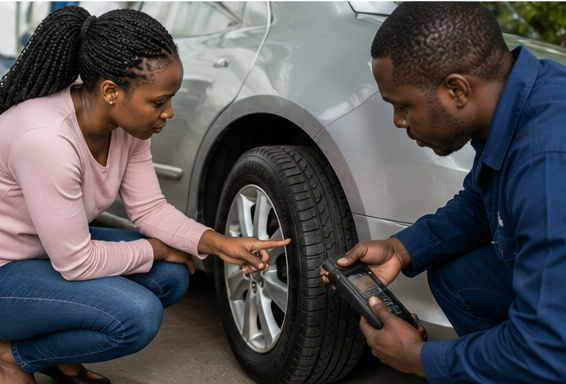
Tyres
Inspect tread depth and uneven wear.
Electronics
Test lights, windows, cameras, infotainment, and dashboard warnings.
Air Conditioning
Don’t assume it works properly.
Test it.
Vehicle History
Ask questions about previous accidents, ownership, and servicing.
If you’re not mechanically experienced, pay for a professional inspection.
Spending a little money on an inspection can save you from a much larger repair bill.
📋 Step 4: Understand Ownership Transfer
You’ve found the car.
You’ve negotiated the price.
You’ve paid.
But you’re not finished yet.
You need to make sure the vehicle ownership is properly transferred.
For Kenyan buyers, understanding the logbook transfer process is essential.
Don’t simply assume that because you’ve paid for the car, everything is automatically sorted.
Make sure you understand:
- Who is registered as the current owner.
- Whether the ownership details are correct.
- Whether there are outstanding issues affecting the vehicle.
- What documentation is required.
- How the transfer process works.
A car is a major purchase.
Treat the paperwork with the same seriousness as the mechanical inspection.
🇰🇪 Step 5: Choose a Car That Kenya Can Support
This is something many first-time buyers overlook.
You might find an imported vehicle that looks incredible.
The price may be attractive.
The features may be impressive.
But ask yourself:
Can I easily find spare parts for this car in Kenya?
Are there mechanics who understand it?
Will I struggle to find replacement components?
What happens if the car develops an unusual fault?
This is why popularity can sometimes be an advantage.
A common vehicle may have:
- More mechanics familiar with it.
- More spare parts.
- More owner communities.
- More information online.
- Better resale demand.
That doesn’t mean you should only buy common cars.
It means you should understand the support ecosystem before choosing something unusual.
🛞 Step 6: Don’t Forget Spare Parts
Your first car will eventually need maintenance.
Every car does.
You may need:
- Oil filters.
- Air filters.
- Brake pads.
- Spark plugs.
- Wiper blades.
- Tyres.
- Batteries.
And eventually, larger components may need attention.
Before buying a vehicle, research the availability and price of common replacement parts.
Also learn the difference between:
Genuine parts
OEM parts
Aftermarket parts
Counterfeit parts
The cheapest part isn’t necessarily the best deal.
A low-quality component that fails quickly may cost you more in the long run.
⛽ Step 7: Think About Fuel Before You Buy
Fuel is one of the costs you will feel regularly.
A car that looks affordable at the dealership may become expensive if it consumes a lot of fuel and you drive long distances every day.
Think about your daily routine.
If you drive 50 kilometres every day, fuel economy matters.
If you mostly drive short distances, your priorities may be different.
This is where understanding your lifestyle becomes important.
Don’t buy a car based on what you drive once a month.
Buy based on what you do every week.
🛠️ Step 8: Learn Basic Car Maintenance
You don’t need to become a mechanic.
But every car owner should understand the basics.
Know:
- When your oil needs changing.
- How to check tyre pressure.
- What dashboard warning lights mean.
- How to recognise overheating.
- When your battery may be failing.
- When your brake pads may need replacement.
The more you understand your car, the harder it is for someone to take advantage of your lack of knowledge.
That’s one of the biggest goals of TorqueSavvy:
To make the Kenyan motorist a more informed consumer.
🚨 5 Mistakes First-Time Kenyan Car Buyers Should Avoid
1. Buying Based Only on Appearance
A beautiful car can hide expensive problems.
2. Spending Every Last Shilling
You need money for ownership after the purchase.
3. Skipping the Inspection
Never assume everything is fine.
4. Ignoring Parts Availability
Your car will eventually need replacement parts.
5. Buying Someone Else’s Dream Car
The car that looks good on social media may not be right for your lifestyle.
🧠 TorqueSavvy First-Car Test
Before buying, answer these seven questions:
1. Can I afford the car?
2. Can I afford to maintain it?
3. Is it suitable for my daily driving?
4. Can I find genuine or quality replacement parts?
5. Can I find qualified mechanics?
6. Have I independently inspected it?
7. Have I properly handled the ownership paperwork?
If you can answer yes to all seven, you’re probably approaching your purchase the right way.
🚗 What Should Your First Car Actually Be?
There is no single answer.
Your first car might be:
- A small hatchback.
- A compact sedan.
- A family saloon.
- A compact SUV.
- A reliable hybrid.
The important thing is that it should match your:
Budget.
Lifestyle.
Driving environment.
Maintenance ability.
Long-term plans.
Your first car doesn’t have to impress everyone.
It needs to work for you.
🇰🇪 The Kenyan First-Time Buyer’s Checklist
Before handing over your money:
☐ Set a realistic total budget.
☐ Research the specific model.
☐ Check fuel consumption.
☐ Research spare-parts availability.
☐ Inspect the engine.
☐ Inspect the transmission.
☐ Check the suspension.
☐ Inspect the tyres.
☐ Test all electronics.
☐ Check the air conditioning.
☐ Verify the vehicle’s history.
☐ Conduct a professional inspection.
☐ Understand the ownership transfer process.
☐ Budget for insurance.
☐ Keep an emergency repair fund.
☐ Take your time before making the final decision.
💡 TorqueSavvy Insight
The best first car is rarely the car that makes the biggest impression.
It’s the car that you can:
Buy comfortably.
Maintain confidently.
Repair affordably.
Drive reliably.
Sell reasonably well.
That’s what makes a first car a smart purchase.
🤔 Did You Know?
Many first-time buyers focus heavily on the purchase price but overlook the cost of downtime.
If your vehicle is your primary way of getting to work or running your business, a major breakdown can cost you more than the repair itself.
You could lose:
- Working days.
- Business opportunities.
- Transport money.
- Time.
This is another reason why reliability and parts availability matter so much.
Sometimes, paying slightly more for a well-maintained vehicle can be cheaper than buying a bargain that constantly needs repairs.
⭐ The Bottom Line
Buying your first car should be exciting.
But it should also be one of the most informed financial decisions you make.
Don’t rush because you’ve found a beautiful vehicle.
Don’t buy because your friend says it’s a good deal.
Don’t spend every last cent because you want a better model.
And don’t skip the inspection because the seller seems trustworthy.
Take your time.
Ask questions.
Check the car.
Understand the paperwork.
Research the maintenance costs.
And think about your life five years after the purchase—not just the excitement of driving it home.
Because your first car isn’t just a vehicle.
It’s the beginning of your journey as a car owner.
Make sure you start that journey on the right road.
🚗 TorqueSavvy CTA
Looking for Your First Car?
Don’t know where to start?
Tell TorqueSavvy your budget, preferred vehicle type, location, and what you need the car for.
We can help connect you with options that fit your needs while giving you the information you need to make a smarter decision.
👉 Start your car search with TorqueSavvy.
💬 Kenya Wheels Wednesday Question
What was your first car—or what car are you hoping will be your first?
And if you already own one, what is the one thing you wish someone had told you before you bought it?
Your experience could help another Kenyan make a better decision.
