

⏱️ Reading Time: 7 Minutes
📖 At a Glance
Best For: Kenyan car buyers, technology enthusiasts, importers, dealers, and motorists interested in understanding how global automotive trends could shape the future of driving in Kenya.
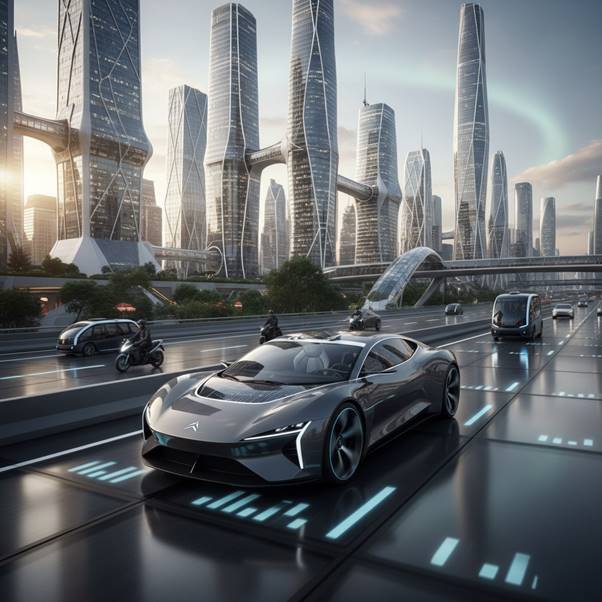
Key Takeaway: The global automotive industry is moving toward electrification, smarter vehicles, cleaner technology, and increasingly connected cars. Kenya may not adopt every global trend at the same speed, but international changes will eventually influence the vehicles available in our market.
🔑 Key Takeaways
- The global automotive industry is undergoing one of its biggest transformations in decades.
- Electric vehicles and hybrids are becoming increasingly important.
- Battery technology is improving and becoming a major focus for manufacturers.
- Software is becoming an increasingly important part of modern vehicles.
- Global vehicle trends eventually influence Kenya’s import market.
- Kenyan buyers need to understand new technology before investing in it.
- The future of Kenyan motoring will likely include a mixture of petrol, diesel, hybrid, and electric vehicles.

🌍 The Automotive World Is Entering a New Era
For more than a century, the automotive industry was largely built around one basic formula:
Fuel + Engine + Transmission = Movement
But that formula is changing.
Today, manufacturers around the world are investing heavily in:
- Electric vehicles.
- Hybrid powertrains.
- Battery technology.
- Artificial intelligence.
- Advanced driver assistance.
- Connected vehicles.
- Software-based features.
The car is no longer simply a machine.
It is becoming a combination of mechanical engineering, electronics, software, and data.
For consumers, this means the way we think about buying and owning cars is also changing.
⚡ Electric Cars Are Changing the Definition of Performance
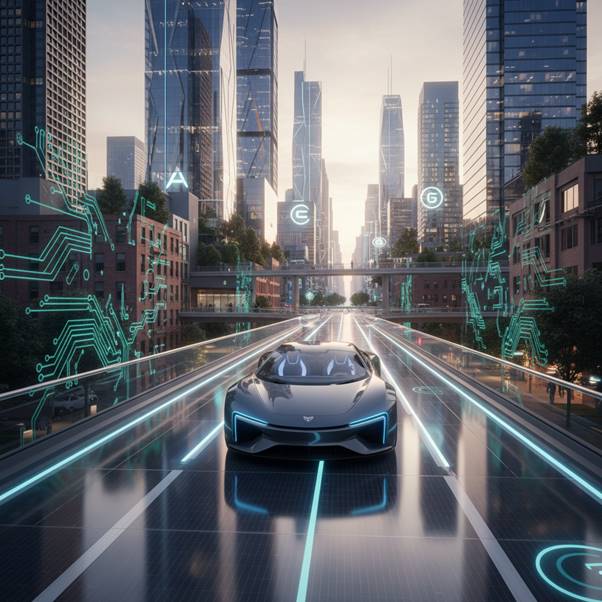
One of the biggest global trends is the rise of electric vehicles.
For decades, petrol and diesel engines dominated the performance conversation.
Today, electric motors are challenging that assumption.
Electric vehicles can deliver instant torque, meaning acceleration can feel immediate.
This connects directly to our recent Performance Friday discussion about horsepower and torque.
An electric vehicle doesn’t necessarily need a massive engine to deliver impressive acceleration.
Instead, it uses electric motors that can deliver strong torque almost instantly.
This is one reason electric performance cars are becoming increasingly popular around the world.
But the real question for Kenya is:
Can this technology work for our market?
The answer is complicated.
🇰🇪 What Does This Mean for Kenya?
Kenya’s automotive market is different from markets in Europe, Asia, or North America.
We have different:
- Road conditions.
- Driving distances.
- Infrastructure.
- Vehicle import patterns.
- Maintenance networks.
- Consumer budgets.
A technology that works perfectly in one country may face different challenges here.
For example, an electric car may be excellent for someone who drives short distances within Nairobi and can charge at home.
But someone who regularly travels long distances through areas with limited charging infrastructure may need a different solution.
This is why Kenyan consumers should not simply copy global automotive trends.
We need to adapt them to our reality.
🔋 The Battery Question
One of the biggest concerns surrounding electric vehicles is the battery.
How long does it last?
How much does it cost to replace?
Can it be repaired?
What happens when the battery loses capacity?
These are legitimate questions.
For Kenyan buyers, battery health will become increasingly important as more used electric and hybrid vehicles enter the market.
A buyer looking at a used EV should eventually think about battery condition in the same way a traditional car buyer thinks about:
- Engine condition.
- Transmission health.
- Turbocharger condition.
- Service history.
The battery may become one of the most important components to inspect.

🧠 The Car Is Becoming a Computer
Another major global trend is the rise of software-defined vehicles.
Modern cars increasingly use software to control:
- Infotainment.
- Driver assistance.
- Navigation.
- Vehicle settings.
- Safety features.
- Performance modes.
Some manufacturers are even allowing vehicles to receive software updates remotely.
This could eventually change how cars are maintained.
Instead of visiting a workshop for every improvement, some updates may happen digitally.
For Kenyan consumers, this creates both opportunities and challenges.
A vehicle that relies heavily on software may require technicians with specialised diagnostic equipment and knowledge.
The future mechanic may need to understand both:
Mechanical engineering and computer systems.
💡 TorqueSavvy Insight
The global automotive industry is moving quickly.
But Kenya doesn’t have to adopt every new technology immediately.
Our advantage is that we can learn from markets that are already experiencing the benefits and challenges of new automotive technologies.
Before buying a new type of vehicle, Kenyan consumers should ask:
Is there local technical support?
Are spare parts available?
Can I charge or fuel the vehicle conveniently?
How expensive is maintenance?
Will the technology suit my driving habits?
These questions are more important than simply buying the newest technology.
🚨 Common Mistake to Avoid
Don’t assume that newer automatically means better.
A brand-new technology can be exciting, but early adopters often face challenges.
For example:
- Limited repair expertise.
- Expensive replacement components.
- Limited spare parts.
- Poor resale knowledge.
- Unfamiliarity among mechanics.
This doesn’t mean Kenyans should avoid new technology.
It means we should adopt it intelligently.
🚗 What Could the Kenyan Car Market Look Like in the Future?
The most realistic future may not be completely electric.
Instead, Kenya could see a mixture of technologies.
Petrol Vehicles
Still likely to remain common for many years.
Diesel Vehicles
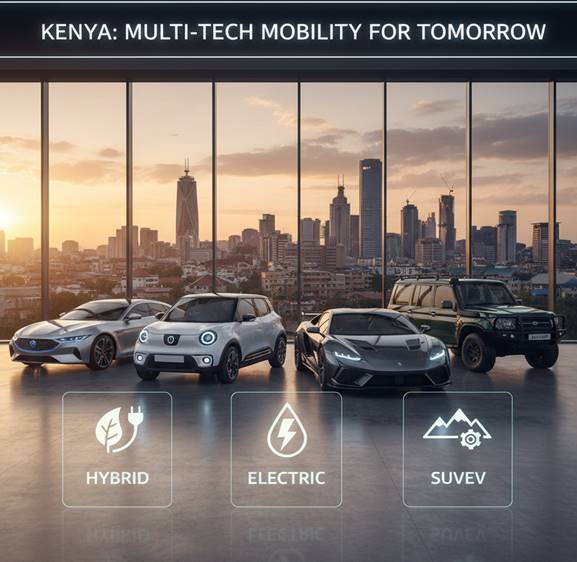
Likely to remain important for pickups, commercial vehicles, and some SUVs.
Hybrids
Potentially one of the strongest transition technologies because they combine petrol engines with electric assistance.
Plug-In Hybrids
Could become more attractive as charging infrastructure improves.
Fully Electric Vehicles
Likely to continue growing, especially in urban environments.
Hydrogen
Interesting globally, but likely to face major infrastructure challenges before becoming mainstream in Kenya.
📊 TorqueSavvy Global-to-Kenya Outlook
| Global Trend | Potential Kenyan Impact |
| Hybrid Vehicles | ⭐⭐⭐⭐⭐ |
| Electric Vehicles | ⭐⭐⭐⭐☆ |
| Battery Technology | ⭐⭐⭐⭐⭐ |
| Connected Cars | ⭐⭐⭐⭐☆ |
| Advanced Driver Assistance | ⭐⭐⭐⭐☆ |
| Fully Autonomous Cars | ⭐⭐☆☆☆ |
| Hydrogen Vehicles | ⭐⭐☆☆☆ |
TorqueSavvy Prediction
Hybrids and efficient petrol vehicles are likely to remain important in Kenya while electric mobility continues to develop.
🇰🇪 Kenyan Buyer’s Verdict
Best transition technology: ⭐ Hybrid
Best for urban driving: ⭐ Electric Vehicle
Best for long-distance flexibility: ⭐ Petrol or Hybrid
Best for heavy-duty use: ⭐ Diesel
Most important future consideration: ⭐ Availability of support and infrastructure
Would TorqueSavvy Recommend Buying an Electric Vehicle Today?
⭐⭐⭐⭐☆ Yes—but only after checking your personal circumstances.
Before buying, consider:
- Where you live.
- Where you park.
- Whether you can charge at home.
- Your average daily distance.
- Your long-distance travel habits.
- Access to qualified technicians.
- Battery warranty.
- Availability of spare parts.
The right technology is the one that fits your lifestyle.
🔧 TorqueSavvy Practical Tip
If you’re considering importing a hybrid or electric vehicle, don’t treat it like buying a traditional petrol car.
Ask for:
- Battery health information.
- Charging specifications.
- Service history.
- Battery warranty details.
- Accident history.
- Diagnostic reports.
- Availability of replacement parts.
Understanding the technology before buying can save you from expensive surprises later.
🤔 Did You Know?
The future of automotive technology isn’t necessarily about choosing between petrol and electric.
Many manufacturers are developing vehicles that combine multiple technologies.
Hybrid systems, regenerative braking, advanced batteries, and highly efficient combustion engines are all being developed together.
For consumers, this means the future of motoring may be less about one technology replacing another and more about different technologies working together.
⭐ The Bottom Line
The global automotive industry is changing.
But Kenya doesn’t need to follow every global trend blindly.
We need to understand what is changing, study the benefits and challenges, and choose what actually works for our roads, budgets, infrastructure, and lifestyles.
The future Kenyan car market will probably not be defined by one technology.
Instead, we may see a combination of:
Petrol.
Diesel.
Hybrids.
Electric vehicles.
And perhaps technologies we haven’t even fully adopted yet.
The real winners will be Kenyan consumers who understand these technologies before making purchasing decisions.
Because the future of Kenyan motoring isn’t simply about which car is newest.
It’s about which technology makes the most sense for Kenya.
🚗 TorqueSavvy CTA
Looking for a Clean Import or Quality Local Unit?
Finding the right car doesn’t have to be stressful.
Tell TorqueSavvy your budget, preferred make, model, and location, and our growing network of vetted dealers can help you source a clean import or quality local unit that matches your needs.
👉 Start your vehicle search today.
💬 Global Auto Sunday Question
If you were buying your next car today, would you choose petrol, diesel, hybrid, or fully electric—and what is the biggest factor influencing your decision?
Tell us in the comments and let’s help other Kenyan motorists make smarter decisions about the future of driving.
